
Even with No Election in Sight, the Anti-Netanyahu Opposition Bloc is Reorganizing
Although elections for the Knesset are not scheduled until October 2026, it currently seems that all political players in Israel (including coalition parties) understand that the current Knesset and government are unlikely to complete a full four-year term, and that early elections may only be a matter of time. This has led all parties currently represented in the Knesset to begin preparing for the upcoming election campaign.
As a result, we are seeing parties in Israel, especially within the opposition bloc, reorganizing themselves. This is evident in the creation of the new “Democrats” party, a merger of the two left-wing parties Labor and Meretz, under the leadership of Yair Golan - a fierce critic of Netanyahu, former IDF Deputy Chief of General Staff who, on October 7, rushed to the Gaza border to rescue civilians.

At the same time, new parties are emerging and planning to run in the next elections. These could significantly impact the results and serve as kingmakers in determining who will form the next government.
It is important to note that most of these parties identify with the anti-Netanyahu opposition bloc. However unlike the current coalition, which is relatively homogenous politically, the Israeli opposition includes center-right, centrist, and left-wing parties, united primarily by their opposition to Netanyahu and his government. In addition, each party leader in the anti-Netanyahu bloc sees themselves as a potential prime minister, making it difficult for the bloc to unite around a single candidate - even though Israeli elections are for parties rather than directly for the premiership.
The new party expected to run in the upcoming elections and likely to be the most influential among them is a center-right party led by former Prime Minister Naftali Bennett. According to all current polls, Bennett is the only opposition candidate capable of winning more seats than Netanyahu’s Likud, making him the most realistic challenger to replace Netanyahu if he can form a government with opposition parties. However, given his right-wing ideology and his statements that he will not rely on Arab parties, it is possible that he could push for a unity government involving Netanyahu (and perhaps some of his allies) alongside elements of the anti-Netanyahu bloc.

Another major player in the upcoming elections is former IDF Chief of General Staff and MK Gadi Eisenkot, who this week (September 16) announced the formation of a new party Yashar! ("Forward"), that includes well-known figures from both the right and the left, though he has not yet presented a clear political platform.
Unlike fellow former-general-turned-centrist-politician Benny Gantz, Eisenkot has made it clear that he will not sit in a government with Netanyahu. He is also considered a relatively reliable and likable leader, partly due to his personal tragedy: his son Gal was killed in Gaza while on a hostage-rescue mission.
Until a few months ago, Eisenkot was part of Gantz’s National Unity Party, but after disagreements between them, he resigned from the Knesset. Nevertheless, Eisenkot has not ruled out joining forces with other opposition parties and is actively pushing for alliances so that the opposition enters the elections with only three or four parties, thereby minimizing wasted votes. A merger between Eisenkot and parties such as Yesh Atid, Yisrael Beiteinu, the Democrats, or Bennett’s new party is entirely plausible.

Beyond Bennett and Eisenkot, other figures are also establishing new parties. Although their chances of entering the Knesset in the upcoming elections are not particularly high, they could still influence the distribution of votes among the larger parties and thereby affect the final outcome.
The first is Yoaz Hendel, who served as communications minister in the Bennett-Lapid government. Hendel is currently working to establish a party representing IDF reservists that would advocate for their interests, including a controversial demand to revoke voting rights from citizens who do not serve - a measure primarily aimed at reducing ultra-Orthodox influence in government. The “Reservists’ Party” is likely to lean to the right politically, though it is unclear whether it would agree to join a right-wing government that includes ultra-Orthodox parties, or with left-leaning parties like the Democrats.
Another figure is former Mossad Chief Yossi Cohen, who announced his candidacy in the upcoming elections with a new center-right party. Although Cohen currently presents himself as an alternative to Likud, his close ties to Netanyahu and his long-standing association with Likud - where he was once considered Netanyahu’s potential successor - have led many Israelis to suspect that Cohen’s new party is essentially a Likud satellite. Some in the protest movement even refer to him as “Yossi Proxy,” believing the party is designed to prevent disillusioned coalition voters from drifting away.
The last figure worth focusing on is Yonatan Shamriz, brother of the fallen hostage Alon Shamriz, who was killed in Gaza. Shamriz founded the movement “Kumu” (“Wake Up”), which presents itself as a movement for cultivating new leadership after October 7. Since then, it has been very active in protesting against the government, organizing an alternative ceremony to mark October 7, and campaigning for the return of the hostages. Although Shamriz has not officially announced a run for the Knesset, it very likely he will. Even if he decides to run, it is unclear whether he will establish a new party or join an existing one.
After reviewing these players, who could prove decisive in the outcome of the upcoming elections, it is important to note that the proliferation of parties in the opposition bloc could be disastrous. Some of these parties may fail to cross the electoral threshold, thereby “wasting” opposition votes - as happened with Meretz in the previous elections.
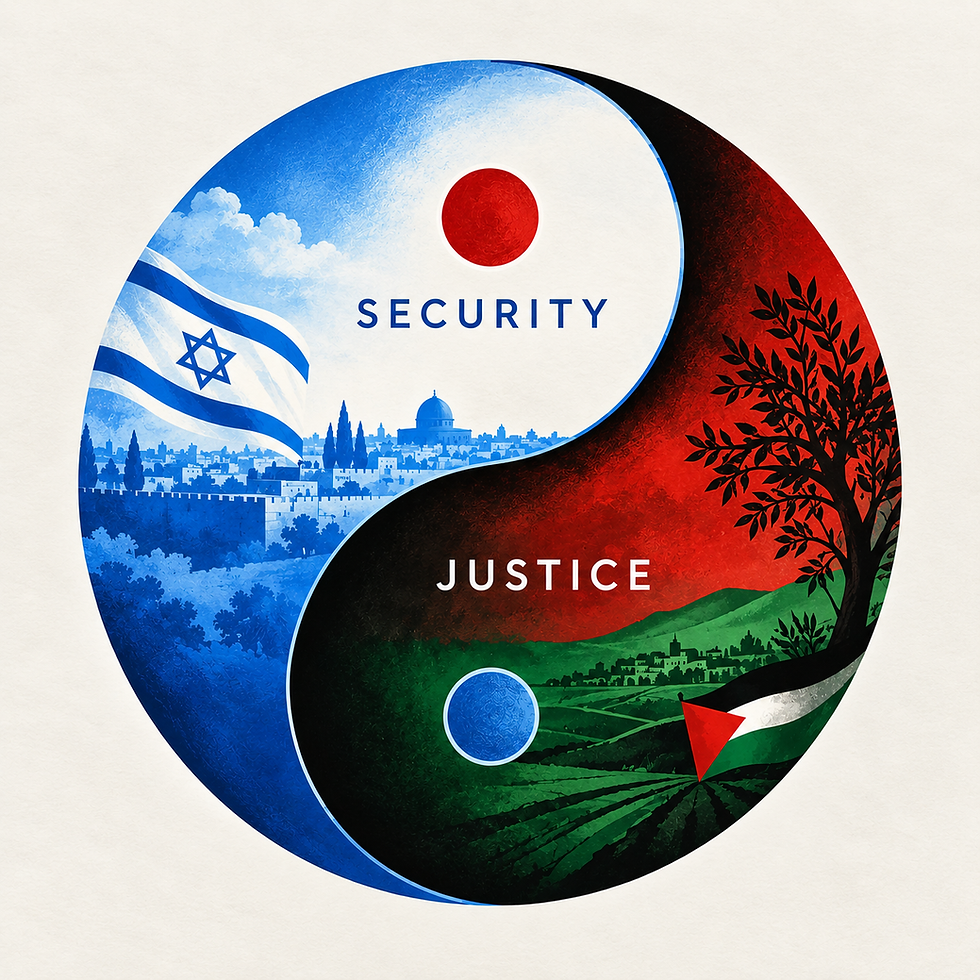


And Einat Wilf's new party Oz, merging ideas from the right and the left to create an ideology that goes beyond the familiar dichotomies and strive to create a new social contract. I'm strongly rooting for her.